

AI vs Humanize Intelligence – Who Wins the Future? | RankRise1
Meta Description:
Explore the deep comparison between AI and human intelligence. Discover what the future holds, how both impact our world, and what might be the end of these evolving intelligences.
—
Introduction
In today’s fast-changing world, one question captures everyone’s attention: AI vs Humanize Intelligence – what is the end of these?
As artificial intelligence keeps growing smarter, many wonder whether it will one day replace human thinking or simply enhance it. Both AI and human intelligence have their own strengths, weaknesses, and unique purposes. But understanding how they connect is the key to shaping a balanced, smarter future.
—
1. Understanding Artificial Intelligence
Artificial Intelligence (AI) refers to machines or systems designed to perform tasks that usually need human intelligence — like learning, reasoning, problem-solving, and decision-making.
From chatbots and virtual assistants to complex data systems, AI helps automate everyday tasks and improve efficiency.
Examples of AI in use:
Smart assistants like Siri and Alexa
Self-driving cars
Predictive tools in marketing and finance
Healthcare diagnostics and robotic surgery
However, while AI can process huge amounts of data in seconds, it still lacks emotions, empathy, and ethical judgment — qualities only humans can provide.
—
2. What Is Humanize Intelligence?
Humanize intelligence is the natural ability of humans to feel, think creatively, and act with empathy. It includes emotional understanding, moral reasoning, and the capacity to learn from real-life experiences.
Unlike AI, human intelligence is not programmed; it evolves through emotions, social interaction, and lived experiences.
Key traits of human intelligence:
Emotional depth
Ethical awareness
Creativity and imagination
Adaptability in uncertain situations
Humans can solve problems with both logic and heart — something machines still struggle to do.
—
3. AI vs Humanize Intelligence: A Deep Comparison
Feature Artificial Intelligence Human Intelligence
Learning Ability Learns through data and algorithms Learns through experiences and emotions
Speed Extremely fast at data processing Slower, but more contextually aware
Creativity Limited to pre-programmed inputs Infinite creativity and innovation
Emotions None Deeply emotional and empathetic
Decision Making Based on data and logic Based on ethics, values, and emotions
Both AI and human intelligence complement each other. AI provides accuracy and speed, while humans bring creativity and compassion.
—
4. The Future Relationship Between AI and Humans
The future will not be a battle between humans and AI — it will be a partnership. The real question is not “Who wins?” but “How can both work together for progress?”
Businesses are already blending both forms of intelligence. For example, AI handles repetitive tasks, while humans focus on innovation and strategy.
AI will continue to evolve, but it will always need human supervision, creativity, and empathy to make fair and ethical decisions.
—
5. What Could Be the End of These?
The “end” of AI vs Humanize Intelligence isn’t about one replacing the other. Instead, it’s about integration.
AI will keep advancing, but without human emotional balance, society could lose touch with empathy and moral values. On the other hand, humans who refuse to adapt to AI risk being left behind in a digital world.
The end is coexistence — a future where AI amplifies human intelligence rather than replacing it.
—
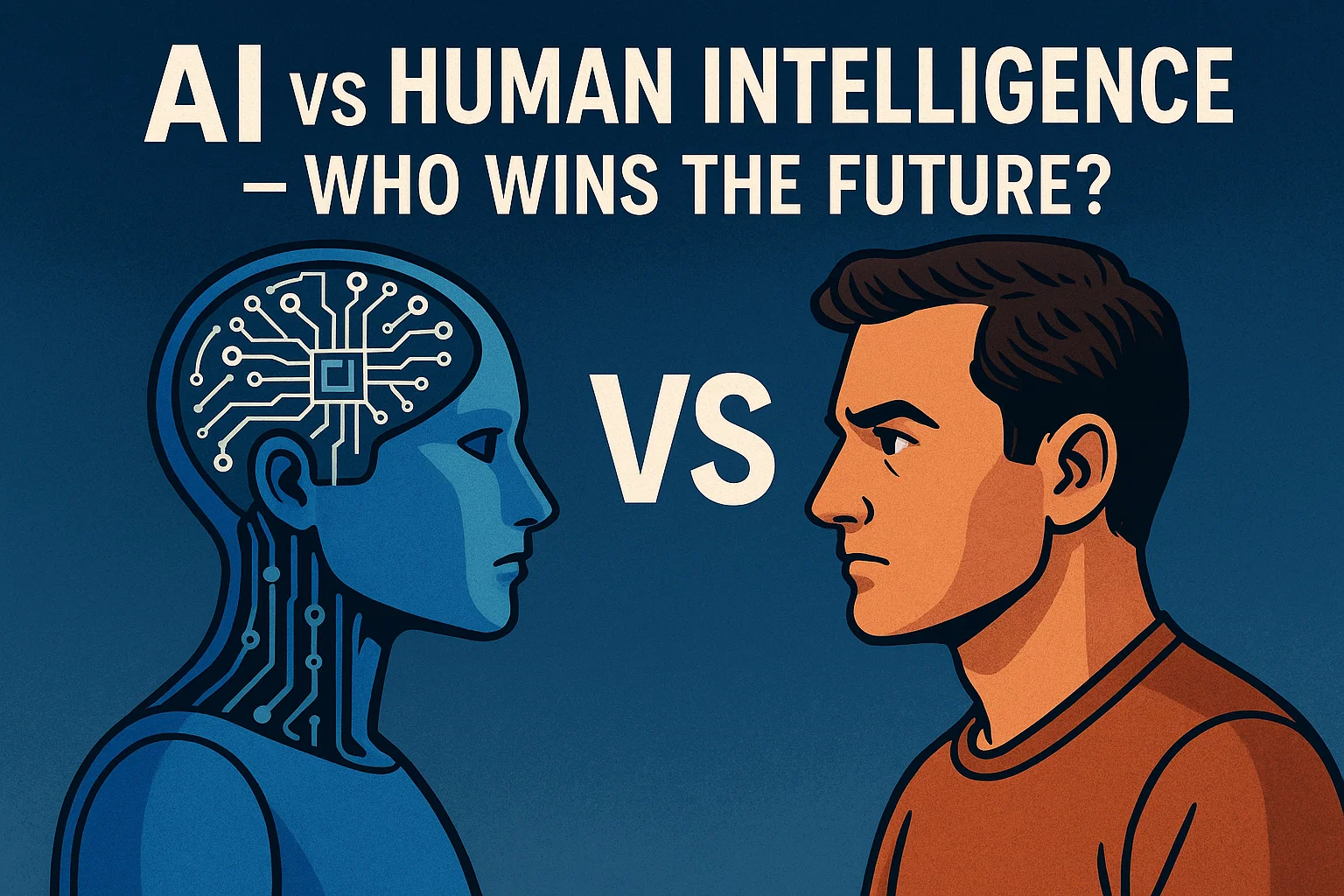
6. Visual Representation of the Future
AI and Human Collaboration
This image perfectly captures the idea of collaboration between humans and AI — two minds working together for a brighter, more innovative tomorrow.
—
7. Real-World Examples
Healthcare: AI helps doctors detect diseases faster, but only humans can comfort and connect with patients.
Education: Smart learning systems personalize education, yet teachers bring motivation and empathy.
Business: AI predicts market trends; humans design creative campaigns that connect emotionally.
Each example shows that AI enhances, not replaces, human intelligence.
—
8. How to Balance AI and Human Power
1. Promote ethical AI development.
2. Focus on human-centered design.
3. Use AI for productivity, not dependency.
4. Encourage lifelong learning and creativity.
5. Integrate emotional intelligence into digital systems.
This harmony will define the true “end” of AI vs Humanize intelligence — not destruction, but collaboration.
—
Internal Links (RankRise1 Resources)
Top SEO Strategies to Rank Higher on Google
How AI Tools Are Changing Content Marketing
Humanizing Digital Experiences for Better Engagement
—
External References
1. Stanford University – The Future of Artificial Intelligence
2. MIT Technology Review – How AI is Shaping Humanity
3. World Economic Forum – AI and the Future of Work
—
Schema Markup (JSON-LD)
{
“@context”: “https://schema.org”,
“@type”: “Article”,
“headline”: “AI vs Humanize Intelligence: What Is the End of These?”,
“author”: {
“@type”: “Person”,
“name”: “RankRise1 Editorial Team”
},
“publisher”: {
“@type”: “Organization”,
“name”: “RankRise1”,
“url”: “https://rankrise1.com”
},
“image”: “https://share.google/images/ouDtVuje1BMq9QkZX”,
“datePublished”: “2025-11-19”,
“description”: “An in-depth look into AI vs Humanize Intelligence — exploring their future, balance, and the end of these evolving intelligences.”
}
—
Conclusion
The debate of AI vs Humanize Intelligence isn’t about domination but evolution. AI brings precision, speed, and automation. Humans bring emotion, creativity, and ethics.
When both join forces, we create a world that is smarter, kinder, and more balanced.
So, the end of AI vs Humanize intelligence isn’t an ending at all — it’s the beginning of a new era of collaboration.
—
#Hashtags
#AIvsHumanIntelligence #FutureOfAI #HumanizeTech #RankRise1 #ArtificialIntelligence #DigitalEvolution #AIandHumans #EthicalAI
—
Would you like me to run this article through my AI Humanizer API next, to make it sound even more naturally written by a human (for SEO and originality score boosts)?