

How AI is Revolutionizing Sports Training in 2025: The Complete Game-Changer Guide
The world of sports training has entered a new era where artificial intelligence is no longer a futuristic concept but an everyday reality for athletes across all levels. In 2025, AI technology is fundamentally changing how coaches design training programs, how athletes monitor their performance, and how teams prevent injuries before they happen. This transformation represents one of the most exciting developments in modern sports history.
From professional leagues like the NBA and NFL to college teams and even youth academies, AI-powered training systems are becoming essential tools for achieving peak performance. The technology analyzes millions of data points in seconds, provides real-time feedback during workouts, and creates personalized training plans that adapt to each athlete’s unique needs. This is not about replacing human coaches—it’s about giving them superpowers to help athletes reach levels previously thought impossible.
Understanding the AI Revolution in Sports Training
Artificial intelligence in sports training refers to the use of machine learning algorithms, computer vision systems, predictive analytics, and smart sensors to enhance athletic performance. These technologies work together to collect massive amounts of data about an athlete’s movements, physical condition, recovery status, and training patterns. The AI then processes this information to provide insights that humans simply cannot detect with the naked eye.
The sports training AI market has experienced explosive growth, reaching approximately $974 million in 2024 and projected to hit $2.3 billion by 2034. This represents a compound annual growth rate of over 9%, reflecting how quickly teams and athletes are adopting these revolutionary tools. The investment makes sense when you consider the results: athletes are seeing performance improvements of 5 to 10 percent across key metrics like speed, endurance, and accuracy.
Why Traditional Training Methods Are Being Enhanced
Traditional sports training relied heavily on coach experience, video review, and basic performance metrics. While these methods produced great athletes for decades, they had significant limitations. Coaches could only observe so much during a training session, human error affected assessments, and injury risks were harder to predict without comprehensive data.
AI doesn’t replace these traditional methods—it supercharges them. Coaches still provide the leadership, motivation, and strategic thinking that athletes need. However, they now have access to objective data that confirms their observations or reveals hidden issues. This combination of human expertise and artificial intelligence creates a powerful partnership that benefits everyone involved in sports training.
The technology addresses several critical challenges that have plagued sports training for years. Overtraining leads to injuries and burnout, but AI can detect early warning signs by monitoring workload patterns. Undertraining prevents athletes from reaching their potential, and AI ensures every session contributes meaningfully to improvement. Training methods that work for one athlete might not work for another, so AI personalizes programs based on individual characteristics.
How Wearable Technology Powers AI Training Systems
Wearable devices serve as the eyes and ears of AI training systems, collecting continuous streams of data throughout training sessions and even during rest periods. These aren’t your basic fitness trackers—we’re talking about sophisticated sensors that measure dozens of physiological and biomechanical parameters simultaneously. GPS trackers embedded in vests map every movement an athlete makes on the field. Heart rate monitors provide real-time cardiovascular data. Accelerometers detect sudden changes in speed and direction. Motion sensors analyze body positioning and technique.
Professional teams are investing heavily in these technologies because the data they generate is invaluable. Soccer clubs use GPS vests to track how far each player runs during matches and training, allowing coaches to manage workloads precisely. Basketball teams employ motion sensors to analyze jump mechanics and landing patterns, reducing knee injury risks. Swimmers wear smart goggles that provide instant feedback on stroke efficiency and turn times.
The AI in sports market achieved $1.03 billion in 2024 and is expected to reach $2.61 billion by 2030, demonstrating the massive investment flowing into this technology. These numbers reflect not just spending on devices but the entire ecosystem of data platforms, analysis software, and integration systems that make wearable technology truly useful for training enhancement.
Real-Time Performance Monitoring
One of the most powerful features of AI-enhanced wearable technology is real-time performance monitoring during training sessions. Athletes and coaches no longer need to wait until after practice to review data—they can see metrics updating live as exercises are being performed. This immediate feedback allows for on-the-spot corrections and adjustments that maximize the effectiveness of every training minute.
When a sprinter’s running form starts to deteriorate due to fatigue, sensors detect the changes in stride length, ground contact time, and posture alignment. The AI system immediately alerts the coach, who can decide whether to modify the workout or end the session to prevent injury. This level of monitoring was impossible just a few years ago, but it’s becoming standard practice in 2025.
The data collected includes far more than basic metrics. Advanced wearables now track muscle activation patterns, showing which muscle groups are working hardest during specific movements. They measure oxygen saturation in muscles, indicating when fatigue is setting in. Some devices even monitor hydration levels and electrolyte balance through skin sensors, helping athletes maintain optimal physical condition throughout long training sessions.
Personalized Training Programs Created by AI
Every athlete is unique, with different strengths, weaknesses, physical characteristics, and goals. Generic training programs that treat everyone the same simply don’t produce optimal results. This is where AI truly shines—by analyzing individual data to create customized training plans that evolve based on actual performance and recovery.
Learn more about AI applications in sports performance optimization
AI algorithms examine thousands of data points about an athlete’s past performances, current physical condition, injury history, and training responses. The system then generates a personalized program that addresses specific needs while accounting for individual limitations. If an athlete is recovering from a hamstring injury, the AI adjusts the program to rebuild strength gradually while avoiding movements that could cause re-injury.
Adaptive Training That Changes Based on Results
The most impressive feature of AI-powered training is its ability to adapt continuously. Unlike static programs that athletes follow for weeks or months, AI systems adjust daily based on how the body is responding. Had a poor night’s sleep? The AI might recommend a lighter training session focused on technique rather than intensity. Recovering faster than expected from a hard workout? The system could suggest pushing a bit harder to maximize improvements.
This adaptive approach prevents the common problem of athletes following outdated programs that no longer match their current state. Traditional training plans are often written weeks in advance and don’t account for day-to-day variations in readiness. Athletes end up either overtraining when they’re already tired or undertraining when they’re ready for more intensity. AI eliminates this inefficiency by making smart adjustments based on real data.
The technology considers multiple factors when adjusting training plans. Resting heart rate variability provides insights into recovery status and nervous system readiness. Sleep quality data reveals whether the body had adequate recovery time. Training load from previous sessions indicates how much stress the body is managing. By weighing all these factors together, AI creates a complete picture of an athlete’s readiness and adjusts the program accordingly.
Injury Prevention Through Predictive Analytics
Perhaps the most valuable application of AI in sports training is its ability to predict and prevent injuries before they occur. Professional sports teams lose millions of dollars every year due to injured players missing games and competitions. More importantly, injuries can end careers and cause long-term health problems for athletes. AI technology is dramatically reducing injury rates by identifying risk factors that humans often miss.
The risk of injury due to overtraining is reduced by 30% when teams implement AI-powered monitoring systems. This remarkable statistic reflects the technology’s ability to detect subtle patterns that precede injuries. An athlete might feel fine and report no pain, but AI algorithms analyzing their movement patterns and workload data can identify developing problems weeks before they become serious.
How AI Detects Injury Risks Early
AI systems track dozens of biomechanical and physiological markers that correlate with injury risk. Movement asymmetries—when one side of the body is working differently than the other—often appear before pain develops. Gradual changes in running gait or throwing mechanics can indicate fatigue or compensation patterns that lead to injuries. Spikes in training load relative to what the body is accustomed to significantly increase injury probability.
The technology uses machine learning models trained on data from thousands of athletes and injury cases. These models learn the patterns associated with different types of injuries. When an athlete’s data starts showing similar patterns, the system raises an alert. Coaches and medical staff can then intervene with targeted rest, modified training, or preventive treatments before the athlete gets hurt.
Computer vision systems add another layer of injury prevention by analyzing movement quality during training. Cameras equipped with AI software track joint angles, body positioning, and movement efficiency in real-time. When an athlete’s landing mechanics after a jump show excessive knee valgus (inward collapse), the system flags this as a potential ACL injury risk. Coaches can immediately work on correcting the movement pattern.
Real-World Examples of AI Transforming Training
Major sports organizations around the world are already seeing remarkable results from implementing AI training systems. Professional soccer clubs in Europe’s top leagues use AI to optimize training schedules across their entire roster. The systems ensure that no player is being overworked while also preventing any player from missing opportunities to improve.
The English Premier League and Spanish La Liga employ sophisticated computer vision systems that track every player movement during matches and training. This data feeds into AI platforms that analyze tactical positioning, running patterns, and physical output. Coaches use these insights to design training sessions that address specific weaknesses identified by the technology.
Professional Athletes Leading the Way
Elite athletes are often the first to adopt cutting-edge training technologies, and AI is no exception. Olympic sprinters use motion sensors to analyze their running mechanics at microscopic levels, measuring ground contact time in milliseconds and stride frequency with perfect accuracy. These tiny improvements, when optimized through AI analysis, can mean the difference between winning gold and finishing fourth.
Professional basketball players benefit from AI systems that track shooting mechanics, including release angle, ball rotation, and follow-through consistency. The technology identifies which specific elements of shooting form correlate most strongly with accuracy for each individual player. Training then focuses on perfecting those key elements rather than wasting time on aspects that don’t significantly impact performance.
Tennis players use AI-powered video analysis to study their serve mechanics and return positioning. The system compares their movements to those of top professional players, identifying differences in technique that could lead to performance improvements. It also analyzes opponent patterns, helping players anticipate shots and position themselves more effectively during matches.
The Role of Computer Vision in Training Analysis
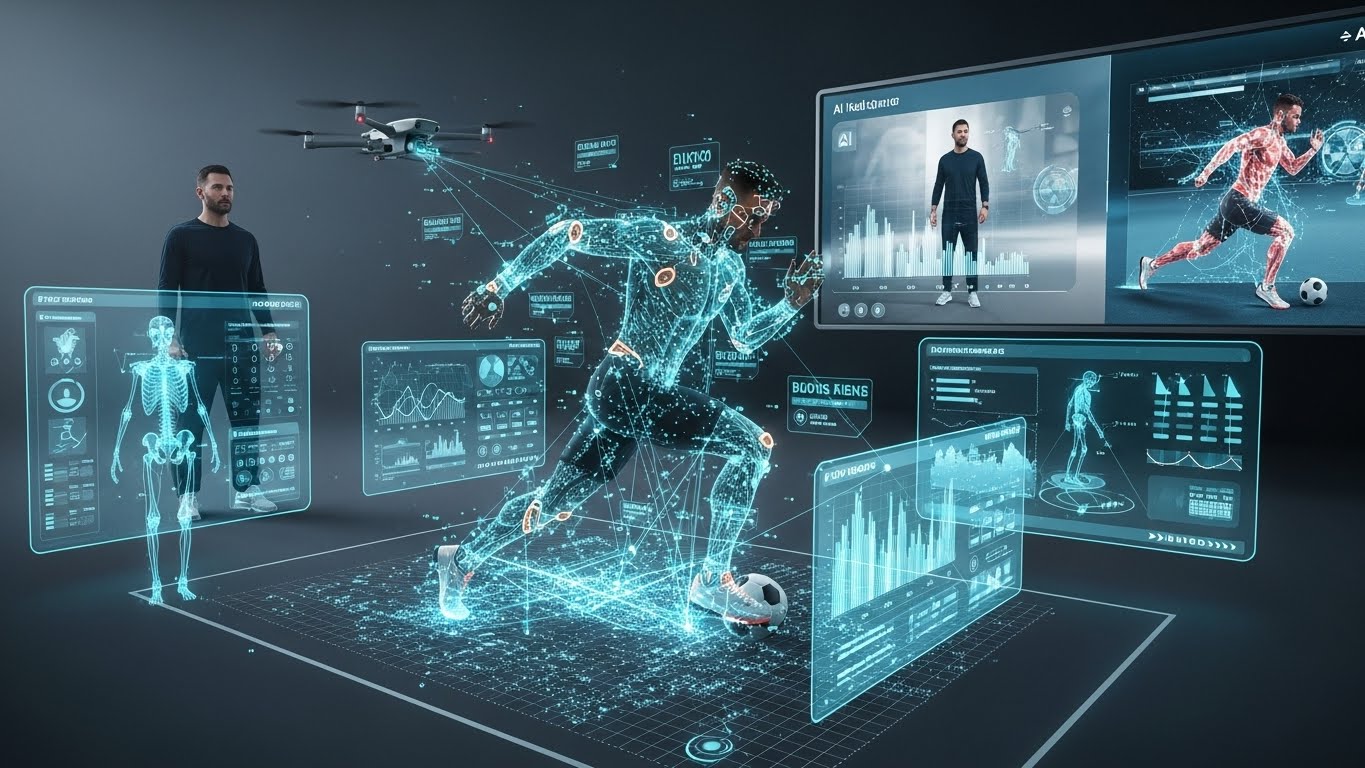
Computer vision represents one of the most powerful AI technologies being applied to sports training. These systems use cameras and advanced algorithms to track and analyze movement in ways that would be impossible for human observers. Every motion is captured, measured, and compared against optimal patterns stored in the system’s database.
The technology works by identifying key points on an athlete’s body—joints, limbs, head position—and tracking how these points move through space during exercises and competitions. Sophisticated algorithms then analyze this movement data to assess technique quality, identify inefficiencies, and detect potentially harmful movement patterns. The precision is remarkable, measuring angles and positions to fractions of a degree.
Breaking Down Complex Movements
Sports involve incredibly complex movements that happen very quickly. A baseball pitcher’s throwing motion takes less than a second from start to finish, making it nearly impossible for coaches to see every detail with the naked eye. Computer vision systems can break down that motion into dozens of frames, analyzing each phase separately to identify mechanical flaws or areas for improvement.
The same technology helps gymnasts perfect their routines by providing detailed analysis of body positioning during flips and twists. Swimmers benefit from underwater camera systems that reveal subtle inefficiencies in stroke mechanics. Golfers use AI-powered swing analysis to optimize their club path, body rotation, and weight transfer. These applications demonstrate the versatility of computer vision across all types of sports.
What makes computer vision particularly valuable is its objectivity. Human observers, even experienced coaches, can be influenced by biases or simply miss details during fast movements. AI systems record everything and analyze it consistently, providing reliable feedback that athletes can trust. This objectivity is especially helpful when working on technical changes that might feel uncomfortable initially but lead to better performance.
Mental Performance and AI Coaching
Physical training is only part of athletic success—mental preparation and psychological resilience matter just as much at elite levels. AI technology is now being applied to mental performance training, helping athletes develop the psychological skills needed to perform under pressure. These systems analyze stress indicators, attention patterns, and decision-making processes during training and competition.
Wearable sensors can detect physiological markers of stress and anxiety, including heart rate variability, breathing patterns, and even subtle changes in skin conductivity. AI algorithms learn each athlete’s normal stress responses and can identify when anxiety is becoming problematic. Coaches then intervene with mental skills training, relaxation techniques, or adjustments to competition preparation.
Virtual Reality Training Environments
Virtual reality systems powered by AI are creating entirely new training possibilities. Athletes can practice in simulated game environments that feel incredibly realistic but allow for controlled learning experiences. A quarterback can face thousands of different defensive formations without risking injury. A soccer goalkeeper can practice stopping penalty kicks from the world’s best players without needing them to be physically present.
These VR training systems use AI to adapt scenarios based on the athlete’s performance. If a basketball player is struggling with a particular type of defensive coverage, the VR system presents more situations involving that coverage until mastery is achieved. The technology tracks reaction times, decision quality, and execution accuracy, providing detailed feedback after each session.
The mental skills developed through VR training transfer effectively to real competition. Athletes report feeling more prepared and confident because they’ve already experienced similar situations in training, even if those situations were virtual. The AI ensures that training scenarios remain challenging but not overwhelming, optimizing the learning experience for each individual.
Team Sports and Collective Intelligence
AI’s impact extends beyond individual training to transform how entire teams prepare and compete. Modern team sports generate enormous amounts of data during every practice and game, but making sense of all that information without AI would be nearly impossible. The technology helps coaches understand team dynamics, optimize lineups, and develop strategies based on comprehensive analysis of both their own team and opponents.
Team-wide monitoring systems track every player’s workload, recovery status, and performance trends. Coaches can see at a glance which players are fresh and ready for intense training, which need additional recovery time, and which might be at risk for injury. This information guides decisions about practice intensity, playing time distribution, and roster management throughout a long competitive season.
Optimizing Team Chemistry and Coordination
Beyond individual metrics, AI systems analyze how players work together as a unit. In basketball, the technology tracks passing patterns, screening efficiency, and defensive rotations to identify combinations of players that perform best together. Soccer analysis includes pressing coordination, passing networks, and spatial relationships between teammates during different game phases.
This collective intelligence helps coaches build lineups that maximize team effectiveness rather than simply putting the most talented individuals on the field. Sometimes players with slightly lower individual ratings perform better together due to complementary skills or strong on-field chemistry. AI helps identify these valuable partnerships that might not be obvious from traditional scouting methods.
The technology also reveals tactical patterns that emerge during training and competition. Does the team defend better in a zone or man-to-man scheme? Which offensive formations create the most scoring opportunities? How does team performance change when facing pressure situations? AI answers these questions with data-driven insights that inform strategic decisions.
Nutrition and Recovery Optimization
Training hard is important, but recovery is when the body actually adapts and becomes stronger. AI systems are revolutionizing recovery practices by providing personalized recommendations for nutrition, sleep, and active recovery activities. The technology considers training load, competition schedule, individual metabolism, and specific goals to create optimal recovery plans for each athlete.
Smart devices now monitor sleep quality throughout the night, tracking deep sleep phases, REM cycles, and nighttime heart rate. AI algorithms analyze this data to assess recovery status and make recommendations for the next day’s training intensity. Athletes who slept poorly might receive a modified training plan that emphasizes technical work over high-intensity efforts that would further stress their system.
Personalized Nutrition Plans
Nutrition requirements vary dramatically between athletes based on their sport, body composition, training phase, and individual metabolism. AI-powered nutrition planning considers all these factors plus real-time data about energy expenditure and body composition changes. The systems recommend specific meal timing, macronutrient ratios, and supplement protocols tailored to each athlete’s needs.
Some advanced systems even provide meal-by-meal guidance, suggesting specific foods and portions that align with training goals and individual preferences. The AI learns which foods the athlete enjoys and which cause digestive issues, gradually refining recommendations to optimize both performance and satisfaction. This personalized approach is far more effective than generic nutrition plans that don’t account for individual differences.
Hydration monitoring represents another area where AI adds significant value. Dehydration impairs performance and increases injury risk, but hydration needs vary based on training intensity, environmental conditions, and individual sweat rates. Wearable sensors track fluid loss and electrolyte balance, while AI systems recommend specific hydration strategies to maintain optimal status throughout training and competition.
The Future of AI in Sports Training
The current applications of AI in sports training are impressive, but we’re still in the early stages of this technological revolution. Researchers and developers are working on next-generation systems that will take performance optimization to levels we can barely imagine today. These future technologies will blur the lines between human and artificial intelligence, creating training environments that adapt in real-time to every aspect of an athlete’s state.
Emerging technologies include smart contact lenses that can monitor glucose levels and provide augmented reality training overlays directly in an athlete’s field of vision. Biometric patches will offer continuous monitoring of lactate levels, electrolyte balance, and other markers that currently require blood tests. Quantum sensors may eventually provide molecular-level analysis of muscle function and recovery status.
AI Democratization in Sports
One of the most exciting trends is the democratization of AI training technology. Tools that were once available only to professional teams with massive budgets are becoming accessible to college programs, high school teams, and even individual athletes. Cloud-based platforms and affordable wearable devices are bringing advanced analytics to athletes at all levels who want to optimize their training.
This accessibility could fundamentally change talent development in sports. Young athletes from small towns or under-resourced programs can now access coaching insights and training optimization that rival what professionals receive. The playing field becomes more level when technology reduces the advantage that comes purely from having access to elite coaching and training facilities.
However, this democratization also raises important questions about fair competition and the role of technology in sports. Should all athletes have equal access to AI training tools, or is their use something teams and individuals can choose based on resources? How much should technology influence outcomes in competitions that have traditionally emphasized natural talent and human coaching? These debates will intensify as AI becomes more central to athletic preparation.
Challenges and Ethical Considerations
Despite the enormous benefits AI brings to sports training, the technology also presents challenges and ethical concerns that need careful consideration. Data privacy tops the list of worries—wearable devices and monitoring systems collect incredibly detailed information about athletes’ bodies and health status. Who owns this data? How should it be protected? What happens if it’s shared without permission or used for purposes the athlete didn’t authorize?
Professional athletes increasingly need to negotiate data rights in their contracts, ensuring they maintain control over their personal information. Youth athletes and their parents need clear policies about what data is collected, how long it’s retained, and who can access it. Schools and sports organizations implementing AI training systems must develop responsible data governance practices that protect participant privacy.
The Risk of Over-Reliance on Technology
Another concern is the potential for over-reliance on AI recommendations at the expense of human judgment and intuition. Experienced coaches develop deep understanding of their athletes through years of observation and interaction. This qualitative knowledge includes emotional state, motivation levels, and psychological factors that current AI systems can’t fully capture. The best approach combines technological insights with human wisdom rather than replacing one with the other.
Athletes themselves might become too dependent on data and lose touch with their own body awareness. Learning to recognize fatigue, read internal signals, and make intuitive adjustments represents an important skill that pure data analysis might undermine. Training programs need to balance AI-driven optimization with teaching athletes to trust their own perceptions and develop self-awareness.
There’s also the question of algorithmic bias. AI systems are trained on historical data, which might not represent all types of athletes equally. If training algorithms are developed primarily using data from male athletes, they might not work as well for female athletes with different physiological characteristics. Developers must ensure their systems are trained on diverse datasets and tested across different populations to avoid creating biased recommendations.
Cost and Accessibility Considerations
Advanced AI training systems require significant financial investment in devices, software platforms, data storage, and technical support. Professional teams and well-funded college programs can afford these costs, but many high school teams, youth clubs, and individual athletes cannot. This creates potential inequality where wealthy organizations gain technological advantages that translate into better performance outcomes.
The sports industry is working to address these accessibility challenges through several approaches. Some companies offer tiered pricing models where basic features are available at low cost while advanced capabilities require premium subscriptions. Open-source AI training platforms are being developed to give everyone access to fundamental analytics tools. Partnerships between technology companies and sports organizations sometimes provide equipment and software to under-resourced programs.
Making AI Training Tools More Affordable
As the technology matures and production scales increase, costs naturally decline. The first GPS tracking vests for athletes cost thousands of dollars each, but now quality devices are available for hundreds. The same price reduction is happening with AI analysis platforms as cloud computing makes powerful processing more affordable and accessible to smaller organizations.
Educational initiatives also help democratize AI training by teaching coaches and athletes how to use available tools effectively. Online courses, certification programs, and community knowledge-sharing platforms ensure that financial resources aren’t the only factor determining who benefits from AI technology. When people understand how to maximize even basic tools, the performance gap between well-funded and poorly-funded programs narrows.
Some sports organizations are establishing equipment-sharing programs where multiple teams or athletes can access expensive technology on a rotating basis. This cooperative approach spreads costs across more users while still providing valuable training data and insights. It’s not perfect—consistent daily monitoring provides more benefits than occasional access—but it’s better than having no access at all.
Implementing AI Training Systems Successfully
Organizations considering AI training systems need strategic implementation plans to maximize benefits and avoid common pitfalls. Simply purchasing technology and hoping it improves performance rarely works well. Successful adoption requires careful planning, stakeholder buy-in, proper training, and ongoing support to ensure the systems are used effectively.
The first step involves clearly defining goals and identifying which specific problems the AI system should address. Are you primarily concerned with injury prevention? Performance optimization? Recovery management? Different AI platforms excel at different applications, so understanding your priorities helps select the right tools. Trying to do everything at once often leads to scattered efforts and disappointing results.
Training Coaches and Athletes on New Technology
Even the most sophisticated AI system provides little value if users don’t understand how to interpret the data and apply insights to training decisions. Comprehensive training programs should teach coaches and athletes the basics of how AI systems work, what the various metrics mean, and how to translate data into actionable training modifications. This educational component is just as important as the technology itself.
Resistance to change represents another common implementation challenge. Coaches who have trained athletes successfully for decades using traditional methods might skeptically view AI as an unnecessary complication. Athletes accustomed to intuitive training approaches might struggle with the idea of letting data guide their preparation. Addressing these concerns through demonstration of benefits and gradual adoption usually works better than forcing immediate wholesale changes.
Start with pilot programs involving a small group of athletes and coaches who are enthusiastic about technology. Document the results carefully, including both quantitative performance improvements and qualitative feedback about user experience. When other program members see concrete benefits achieved by the pilot group, they become more willing to embrace the new systems themselves.
The Human Element Remains Essential
Despite all the technological advances AI brings to sports training, the human element remains absolutely essential to athletic success. AI lacks the emotional intelligence and leadership skills that human coaches have, and these qualities cannot be replicated by even the most sophisticated algorithms. Athletes need motivation, encouragement, accountability, and emotional support—things that technology simply cannot provide at the level humans can.
The most successful training programs view AI as a powerful tool that enhances human coaching rather than replacing it. Coaches use data insights to inform their decisions while still relying on their experience, intuition, and personal relationships with athletes. They know when to push harder based on what the numbers show but also know when an athlete needs rest even if the data suggests they could continue training.
Building Athlete-Coach Relationships
The personal connection between athletes and coaches drives much of sporting success. Athletes work harder for coaches they trust and respect. They push through difficulties when someone they admire believes in their potential. They develop mental toughness through challenging conversations and supportive relationships. These human dynamics create the foundation on which technical training methods, including AI systems, can be most effective.
Technology should strengthen these relationships rather than diminish them. When AI handles the tedious work of data collection and basic analysis, coaches have more time and energy to spend on the human aspects of their job. They can focus on individual conversations, team building, mental skills training, and strategic thinking rather than spending hours manually reviewing training statistics.
Athletes also need to maintain their sense of agency and ownership over their training. The best AI implementations present data and recommendations as information for decision-making rather than dictating exactly what must be done. Athletes who feel they’re collaborating with their coaches and the technology, rather than just following orders from machines, remain more engaged and motivated throughout their development.
Conclusion: Embracing the AI-Powered Future
How AI is revolutionizing sports training in 2025 represents one of the most significant advances in athletic preparation in generations. The technology provides unprecedented insights into performance, enables personalized training at scale, dramatically reduces injury risks, and helps athletes reach their full potential faster than ever before. These benefits are already being realized by professional teams and elite athletes around the world.
Looking forward, AI will become even more integral to sports training as the technology continues improving and becoming more accessible. Young athletes starting their careers today will grow up with AI-powered training as the norm rather than an innovation. Coaches entering the profession will need to understand both traditional training principles and how to leverage technological tools effectively.
The key to success lies in maintaining the right balance—using AI to enhance human expertise rather than replace it, leveraging data while respecting athlete autonomy, and ensuring technology serves the ultimate goal of helping athletes achieve their dreams. When implemented thoughtfully and ethically, AI-powered training systems create opportunities for athletic excellence that benefit everyone involved in sports.
#AISports #SportsTraining2025 #AthleticPerformance #SportsTechnology #AITraining #FutureOfSports #SportScience #PerformanceOptimization #AIRevolution #SmartTraining
Internal Links
- Latest Sports Technology Trends and Innovations
- Wearable Devices for Athletic Performance Tracking
- Sports Injury Prevention Strategies and Tips
External Links and References
- AI in Sports Industry Overview – Intuz
- Sports Science Research and Applications – PMC
- Artificial Intelligence Sports Applications – Taylor & Francis
References and Sources
- Cogniteq Analysis: AI Transforming Sports Industry 2025
- National Center for Biotechnology Information: Artificial Intelligence in Sports Science
- Taylor & Francis Online: AI Applications in Sports Performance
- Market Research Reports: Sports Training AI Market Analysis 2024-2034
- Journal of Sports Medicine: Wearable Technology and Performance Enhancement
- International Journal of Sports Science: Predictive Analytics in Injury Prevention
- Sports Technology Association: Implementation Guidelines for AI Systems
Schema Markup:
{
  "@context": "https://schema.org",
  "@type": "Article",
  "headline": "How AI is Revolutionizing Sports Training in 2025",
  "description": "Comprehensive guide to artificial intelligence applications in sports training, including wearable technology, injury prevention, and performance optimization",
  "image": "https://rankrise1.com/images/ai-sports-training-2025.jpg",
  "author": {
    "@type": "Organization",
    "name": "RankRise"
  },
  "publisher": {
    "@type": "Organization",
    "name": "RankRise",
    "logo": {
      "@type": "ImageObject",
      "url": "https://rankrise1.com/logo.png"
    }
  },
  "datePublished": "2025-01-15",
  "dateModified": "2025-01-15",
  "mainEntityOfPage": {
    "@type": "WebPage",
    "@id": "https://rankrise1.com/ai-sports-training-2025"
  }
}
Social Media Hashtags: #AISports #SportsTraining2025 #AthleticPerformance #SportsTechnology #AITraining #FutureOfSports #SportScience #PerformanceOptimization #AIRevolution #SmartTraining #WearableTech #InjuryPrevention