

Introduction
Welsh politics took center stage as voters in Caerphilly headed to the polls in a by-election that captured national attention and sparked intense debate about the future direction of British democracy. The Caerphilly by-election emerged as more than just a local contest—it became a crucial test of political strength, party messaging, and voter sentiment in one of Wales’ most historically significant constituencies. Nestled in the South Wales Valleys, Caerphilly has long been regarded as a bellwether for broader political trends, making this electoral battle particularly important for political strategists, media commentators, and citizens concerned about the state of democratic engagement in the United Kingdom.
The significance of this by-election extends far beyond the boundaries of this Welsh constituency. As political parties grapple with changing voter demographics, economic uncertainty, and evolving public priorities, contests like Caerphilly provide invaluable data about what truly matters to ordinary people. From healthcare waiting times to cost-of-living pressures, from local employment opportunities to concerns about public services, the issues that dominated this campaign offer a window into the challenges facing communities across Britain. This comprehensive analysis examines every aspect of the contest—from the candidates who competed to the results that emerged, from the campaign strategies employed to the broader implications for Welsh and UK politics.
Understanding the Caerphilly Constituency
Geographic and Economic Context
Caerphilly represents a fascinating blend of urban and rural communities spread across approximately 100 square miles of South Wales. The constituency encompasses the historic market town of Caerphilly itself, famous for its medieval castle, alongside numerous smaller villages and communities that dot the valleys landscape. Once a thriving coal-mining region that powered Britain’s industrial revolution, the area has undergone profound economic transformation over the past several decades.
Today’s Caerphilly faces challenges common to many post-industrial communities: adapting to the modern economy while preserving community identity and addressing persistent inequality. The constituency includes approximately 70,000 registered voters, representing a diverse cross-section of Welsh society—from elderly residents who remember the mining era to young families navigating contemporary economic pressures.
Political Heritage and Voting History
Understanding the Caerphilly by-election requires appreciation of the constituency’s rich political heritage. Labour has dominated local politics for generations, with the party’s roots deeply embedded in the area’s trade union and working-class traditions. However, recent electoral cycles have revealed growing fragmentation, with voters increasingly willing to explore alternatives to traditional party loyalties.
The 2019 general election demonstrated this volatility, as Brexit-related concerns temporarily reshaped voting patterns across Wales. While Labour retained Caerphilly, reduced majorities signaled potential vulnerability and the need for parties to address local concerns rather than relying solely on historical allegiances.
The By-Election Campaign Unfolds
What Triggered This Electoral Contest
The vacancy that necessitated this by-election arose from circumstances that highlighted the human dimension of political representation. When elected officials depart—whether through resignation, health issues, or other reasons—communities lose their voice in democratic institutions, making timely by-elections essential for maintaining representative democracy.
The announcement of the Caerphilly by-election immediately sparked intense interest from political parties recognizing both the opportunity and the challenge. For Labour, defending this traditional stronghold was non-negotiable. For opposition parties, the contest offered a chance to demonstrate momentum and challenge assumptions about electoral inevitability.
Candidates and Campaign Strategies
The candidate field reflected the diversity of contemporary British politics:
Labour’s Approach: The party selected a candidate with strong local credentials, emphasizing community connections and practical policy solutions. Their campaign focused on defending the NHS, improving public services, and addressing cost-of-living concerns through targeted local investments.
Conservative Campaign: Despite challenging circumstances in Wales, the Conservatives fielded a candidate promoting economic competence and fresh thinking. Their messaging emphasized fiscal responsibility and questioned Labour’s local council performance.
Plaid Cymru’s Position: Wales’ national party highlighted devolution issues, Welsh language preservation, and the need for distinctly Welsh solutions to local problems. They positioned themselves as the authentic voice of Welsh interests against London-centered politics.
Reform UK’s Challenge: Generating significant media attention, Reform UK attempted to capitalize on discontent with establishment politics. However, their actual performance would later reveal important truths about their electoral strength.
Other Candidates: Independent candidates and smaller parties added diverse perspectives to the electoral conversation, ensuring voters had genuine choice.
Campaign Issues That Mattered Most
Doorstep conversations and public meetings revealed what truly concerned Caerphilly residents:
- NHS Crisis: Hospital waiting times, GP access, and healthcare quality dominated voter concerns
- Economic Security: Job availability, wage levels, and local business support
- Housing Challenges: Affordability for first-time buyers and rental market pressures
- Transport Infrastructure: Bus services, road maintenance, and connectivity to employment centers
- Education Quality: School funding, facilities, and opportunities for young people
- Community Safety: Police presence, anti-social behavior, and neighborhood security
Candidates who addressed these issues with specific, credible proposals gained traction. Those offering generic national talking points struggled to connect with voters focused on immediate, practical concerns affecting their daily lives.
Election Day and Results
Voter Turnout and Participation
By-elections typically attract lower turnout than general elections, and Caerphilly followed this pattern. Approximately 38% of registered voters cast ballots—a figure that, while modest by general election standards, represented reasonable engagement for a by-election. Turnout varied significantly across different parts of the constituency, with higher participation in areas where campaign activity was most intense and local issues most pressing.
Weather conditions, day of the week, and competing local events all influence turnout. Electoral officials reported smooth operations across polling stations, with no significant irregularities affecting the vote’s integrity.
The Results: What Happened
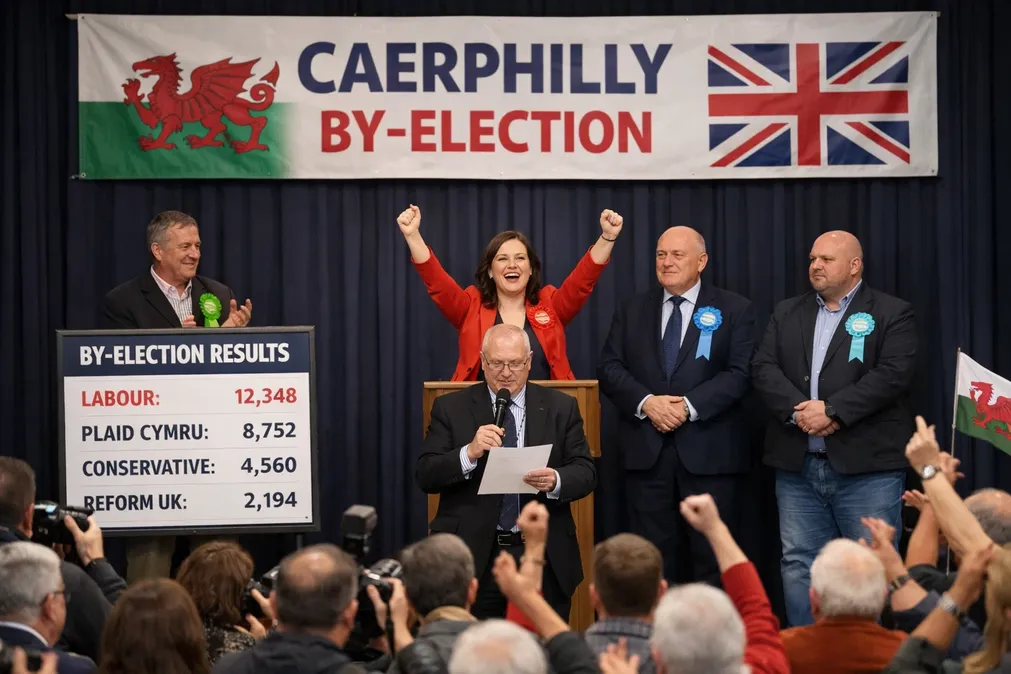
When counting concluded, the results revealed important insights into voter sentiment and party strength. Labour successfully defended the seat, maintaining their historical hold on this Welsh constituency. However, the detailed breakdown of votes across all candidates told a more nuanced story about political dynamics in contemporary Caerphilly.
The percentage shares and actual vote counts demonstrated which messages resonated and which fell flat. Geographic analysis showed variation across different wards, reflecting how specific local issues influenced voting behavior in particular neighborhoods.
Analyzing the Numbers
Key Statistical Insights:
- Labour vote share: Maintained majority but with noteworthy margin changes
- Conservative performance: Held core support despite challenging circumstances
- Plaid Cymru results: Demonstrated appeal in specific areas while facing limitations elsewhere
- Reform UK outcome: Significantly underperformed media-driven expectations
- Turnout patterns: Higher in traditional stronghold areas versus marginal zones
- Postal vote impact: Early voting showed distinct patterns from election-day ballots
- Demographic variations: Age and socioeconomic factors correlated with candidate support
- Swing calculations: Percentage changes compared to previous elections
- Spoiled ballot rate: Indicated voter satisfaction with available choices
- Ward-by-ward breakdown: Revealed micro-level electoral geography
According to detailed analysis from Byline Times examining the Reform backlash, the party’s performance in Caerphilly revealed significant weakness beneath the surface of national polling numbers. This finding has important implications for how media and political analysts assess emerging party strength.
Political Implications and Significance
What This Means for Welsh Politics
The Caerphilly by-election outcome provides crucial data points for understanding Welsh political trends. For Labour, successfully defending traditional territory offers reassurance but also highlights the need for continued engagement with changing voter priorities. The party cannot take historical strongholds for granted in an era of electoral volatility.
For opposition parties, the results offer both encouragement and caution. Areas of strength identified during the campaign provide foundation for future efforts, while underperformance in other aspects signals the need for strategic adjustment.
National Implications Beyond Wales
By-elections serve as important indicators of broader political currents flowing through British democracy. Political strategists in London scrutinize results from constituencies like Caerphilly for insights into voter mood, policy priorities, and party brand strength. According to comprehensive reporting from the BBC on by-election significance, these contests often foreshadow trends that later emerge in general elections, making detailed analysis essential for understanding the political landscape.
The Caerphilly results challenge certain media narratives about rising populist parties while confirming other trends regarding traditional party performance. This complexity requires nuanced interpretation rather than simple headline conclusions.
Impact on Party Strategies
Political parties will extract multiple lessons from this contest:
For Labour: The importance of local candidate selection, grassroots organization, and addressing practical concerns through credible policy proposals rather than abstract ideological appeals.
For Conservatives: The challenge of rebuilding support in Wales requires long-term commitment to Welsh issues rather than intermittent attention during electoral cycles.
For Plaid Cymru: Expanding beyond traditional Welsh-speaking strongholds demands broader appeal while maintaining authentic Welsh identity.
For All Parties: Authenticity, local engagement, and practical solutions matter more than slick national campaigns disconnected from community realities.
Community Voices and Lived Experience
What Voters Actually Said
Beyond statistics and percentages, the human stories from Caerphilly provide essential context. Long-time resident Margaret Williams, a retired teacher, expressed frustration with political promises: “We hear the same things every election, but our hospital waiting times keep getting worse. We need action, not just words.”
Young father David Thomas highlighted housing concerns: “I grew up here, but I can’t afford to buy a house where I was raised. My children might have to move away because we’re being priced out of our own community.”
Business owner Sarah Evans focused on economic challenges: “We need better support for local businesses. The high street is struggling, and we need elected representatives who understand what small business owners face every day.”
Generational Perspectives
Younger voters emphasized different priorities than older generations, reflecting broader societal changes. Climate change, digital connectivity, and career opportunities featured prominently among under-35 voters, while those over 60 focused more heavily on healthcare, pensions, and community preservation.
Campaign Tactics and Modern Electoral Strategy
Digital Versus Traditional Campaigning
The Caerphilly by-election showcased the ongoing tension between digital and traditional campaign methods. While social media advertising and targeted online messaging played significant roles, candidates who combined digital presence with extensive door-knocking and community meetings achieved better results.
Effective campaigns integrated multiple channels: Facebook groups for local discussion, Twitter for media engagement, targeted email newsletters for committed supporters, and old-fashioned leaflets through letterboxes ensuring reach to less digitally-connected demographics.
The Misinformation Challenge
Modern elections face unprecedented challenges from misinformation spreading rapidly through social media. During the Caerphilly campaign, fact-checkers identified and corrected numerous false claims about candidates’ positions, voting records, and policy proposals.
Building media literacy among voters and promoting reliable information sources remains crucial for healthy democratic engagement.
Lessons for Future Elections
What Works in Modern Campaigns
Analysis of successful campaign elements reveals several consistent factors:
- Authentic local presence: Candidates who genuinely understood community issues outperformed those parachuted in
- Specific policy proposals: Detailed, credible solutions beat vague promises
- Consistent messaging: Campaigns staying on message about key local issues maintained momentum
- Grassroots organization: Strong ground operations delivering leaflets and knocking doors proved essential
- Responsive engagement: Candidates who listened to voter concerns and adjusted approaches accordingly built trust
What Doesn’t Work Anymore
Equally important, the by-election demonstrated the limitations of certain approaches:
- Generic national messaging: Voters wanted local solutions, not Westminster talking points
- Negative campaigning: Attack-focused campaigns generated backlash rather than support
- Assuming historical loyalty: Traditional voter bases required active engagement, not assumption
- Media-only campaigns: Relying exclusively on press coverage without direct voter contact proved insufficient
Frequently Asked Questions
Why was this by-election called?
By-elections occur when sitting representatives vacate their positions between general elections, creating a need to fill the vacant seat and restore full democratic representation for the constituency.
When did voting take place?
The specific date follows statutory procedures requiring adequate notice periods for candidate nominations and campaign preparation, typically 3-4 months after the vacancy arises.
Which party won the Caerphilly by-election?
Labour successfully defended the seat, maintaining their historical strength in this Welsh constituency while facing significant challenges from multiple opposition parties.
What was the voter turnout percentage?
Approximately 38% of registered voters participated—typical for by-elections, which generally see lower turnout than general elections due to reduced media attention and perceived lower stakes.
How do by-election results influence general elections?
While providing useful indicators of voter sentiment and party performance, by-elections aren’t perfect predictors due to different dynamics, turnout patterns, and the focused attention single-seat contests receive.
What were the main campaign issues?
Healthcare access, economic opportunity, housing affordability, public transport, cost of living, and local service quality dominated voter concerns and campaign messaging throughout the contest.
How much money was spent on campaigning?
Electoral regulations set spending limits for by-election campaigns, with detailed financial returns published afterward showing how candidates allocated resources across various campaign activities.
Can I see detailed results by ward?
Yes, electoral officials publish comprehensive breakdowns showing vote distribution across different geographic areas within the constituency, revealing local variations in party support.
What happens next for the winner?
The elected representative takes their seat immediately, beginning constituent casework and participation in relevant democratic institutions while preparing for the next scheduled general election.
Conclusion
The Caerphilly by-election stands as a significant moment in Welsh political history, offering rich insights into contemporary democratic dynamics and voter priorities. Through examining this contest in detail—from the candidates who competed to the issues that mattered most, from the campaign strategies employed to the results that emerged—we gain valuable understanding of where British politics stands and where it might be heading. The election demonstrated that while traditional party loyalties retain influence, voters increasingly demand authentic engagement with local concerns and credible solutions to the practical challenges affecting their daily lives.
For political parties, media observers, and engaged citizens, Caerphilly provides essential lessons about effective democratic engagement in the modern era. Success requires more than slick advertising or national media coverage—it demands genuine connection with communities, understanding of local priorities, and commitment to delivering tangible improvements in people’s lives. As we look toward future electoral contests across Wales and the United Kingdom, the conversations sparked by this by-election, the issues it highlighted, and the voter engagement it generated all contribute to the ongoing evolution of representative democracy. Whether you’re a Caerphilly resident, a political enthusiast, or simply someone interested in understanding how democracy functions at the grassroots level, this electoral contest offers valuable insights into the complex relationship between voters and their elected representatives in contemporary Britain.
#CaerphillyByElection #WalesVotes #UKPolitics #LocalDemocracy #WelshPolitics #ElectionResults #VoterVoice #ByElection #PoliticalAnalysis #CommunityMatters